

The Structural Architecture of Urban Poverty
Urban poverty is one of the most persistent and complex social issues of our time, affecting tens of millions of families across cities large and small. Unlike the simplified narratives that dominate political discourse, the root causes of urban poverty are deeply embedded in structural systems that predate the individuals they harm — and continue to reproduce disadvantage across generations. For readers following news about social issues, understanding these underlying forces is essential for making sense of policy debates, community struggles, and the daily headlines that reflect the lived reality of human suffering in our cities.
The story of urban poverty cannot be told without acknowledging how systemic inequalities compound over time. Whether you're examining data from major metropolitan centers or analyzing the quieter desperation of mid-sized post-industrial cities, the same structural forces consistently emerge: inadequate housing, lack of meaningful economic opportunity, underfunded public services, and the enduring legacies of intentional discrimination. This article unpacks each of these forces in depth, drawing on decades of social science research and community testimony to offer a clear-eyed understanding of why urban poverty persists — and what genuine, sustainable solutions will require from policymakers, advocates, and engaged citizens alike.
Residential Segregation and Housing Inequality
Perhaps no single factor is more central to urban poverty than residential segregation and the unequal distribution of housing resources across metropolitan areas. Decades of discriminatory policies — from redlining to exclusionary zoning to racially restrictive covenants — have concentrated poverty in specific neighborhoods while deliberately excluding low-income residents from access to better-resourced communities. These are not historical artifacts. Their effects are alive in today's housing markets, school attendance zones, and the physical infrastructure of neighborhoods across the country.
In cities across the United States and much of the developed world, the geography of poverty maps almost perfectly onto the geography of historical discrimination. Neighborhoods once redlined by federal lending programs in the 1930s and 1940s remain, in many cases, the poorest and most underserved neighborhoods today. Property values were systematically suppressed, private investment was denied, public housing was deliberately sited in already-disadvantaged areas, and the cumulative effect of decades of disinvestment created conditions that individual effort alone cannot overcome.
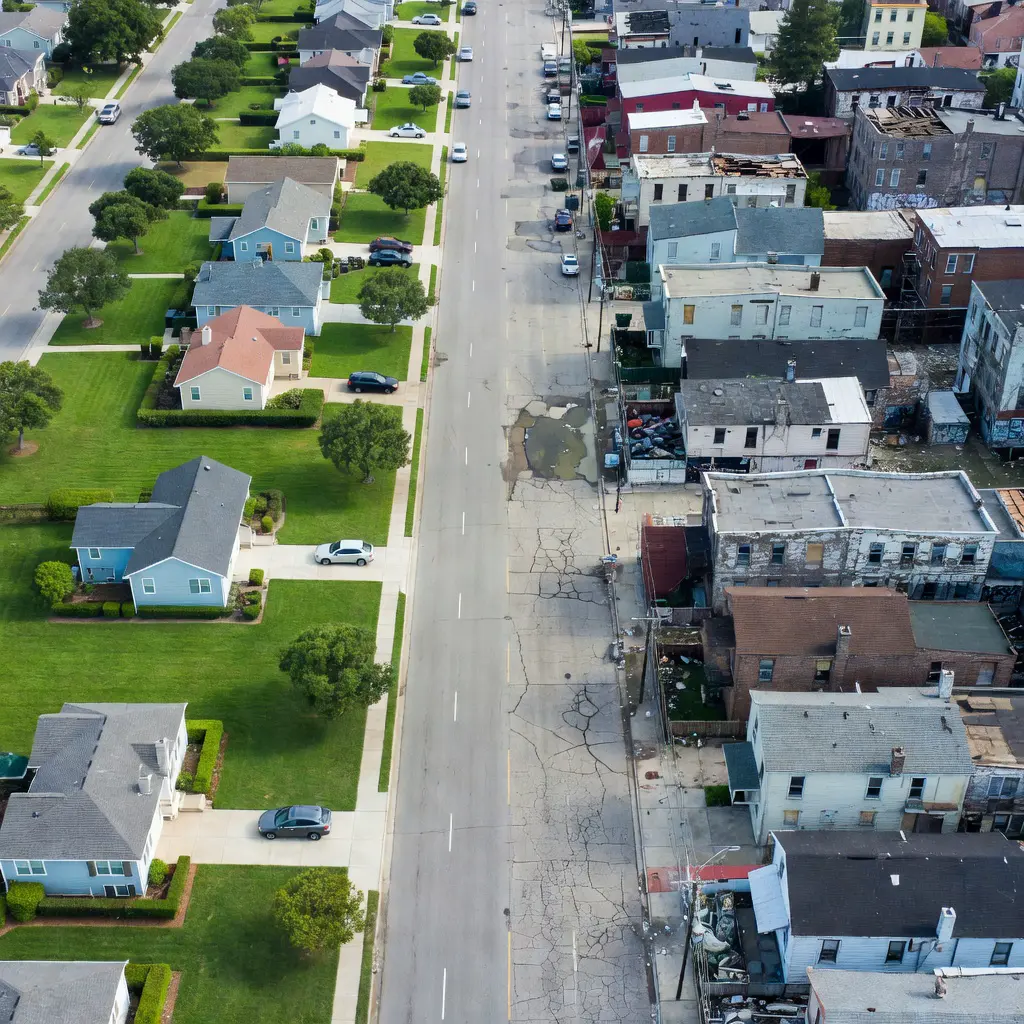
Today, housing cost burden represents the single largest expense for most low-income urban families, often consuming 50% or more of household income. This "cost-burdened" status leaves little margin for emergencies, education, healthcare, or savings — the very building blocks of economic stability. The shortage of affordable housing is not a natural market phenomenon. It is the direct result of zoning laws that restrict dense, affordable development in high-opportunity areas, and decades of federal disinvestment in public housing programs that once served as a floor for the most vulnerable urban residents.
Historical Legacies and Systemic Discrimination
The racial dimensions of urban poverty in America are inseparable from a history of legalized exclusion. Policies including restrictive housing covenants, segregated schools, racially discriminatory application of the GI Bill, exclusion from New Deal labor protections, and the targeted enforcement of drug laws against Black and Latino communities have created wealth gaps that persist and compound across generations. Black and Latino families were systematically excluded from the wealth-building opportunities — homeownership, unionized employment, higher education access — that built the American middle class in the mid-20th century.
These historical exclusions have direct, measurable economic consequences today. The racial wealth gap in the United States means that white families hold, on average, roughly eight times the wealth of Black families and five times the wealth of Hispanic families. This gap did not emerge from cultural preferences or individual choices — it was manufactured through deliberate public policy and private discrimination enforced by law. Understanding this history is not an exercise in blame; it is an act of accurate diagnosis, necessary for designing remedies that actually address causes rather than symptoms. Readers can explore urban poverty trends that illuminate how these historical patterns continue shaping contemporary policy debates and social outcomes.
Economic Barriers Trapping Urban Communities
Beyond housing, a constellation of economic barriers keeps urban families in poverty even when individuals make every ostensibly correct decision. The structure of low-wage labor markets, predatory financial industries, inadequate social safety nets, and the breakdown of labor organizing creates conditions where poverty is not just a personal misfortune but an almost inevitable outcome for a significant portion of the urban population.
The Working Poor and Wage Stagnation
One of the most pervasive and damaging myths about urban poverty is that it primarily affects people who do not work. In reality, a significant proportion of the urban poor are the working poor — individuals and families who hold jobs, sometimes multiple jobs, yet still cannot afford basic necessities. This paradox reflects decades of wage stagnation in low-skill sectors, the collapse of union density in urban labor markets, and the simultaneous dramatic rise in costs for housing, healthcare, and childcare.
Since the early 1970s, productivity in the American economy has increased dramatically while wages for workers in the bottom half of the income distribution have remained nearly flat in real terms. The federal minimum wage, at $7.25 per hour, has not been raised since 2009, and in most major urban areas this figure falls catastrophically short of a living wage. A full-time minimum wage worker earns roughly $15,080 annually before taxes — a fraction of what is required to cover rent, food, transportation, utilities, and healthcare in virtually any major American city.
The structural shift from manufacturing to service-sector employment has fundamentally reshaped urban poverty. Factory jobs that once provided stable, unionized employment with employer-provided benefits have been replaced — not by equivalent employment — but largely by part-time, benefit-free service work with unpredictable scheduling and minimal career advancement. This precarity makes long-term financial planning virtually impossible for low-income families, creating cascading effects: missed rent payments, untreated medical conditions, mounting debt, and eventual housing instability.
| Indicator | National Average | High-Poverty Urban Areas | Poverty Impact |
|---|---|---|---|
| Unemployment Rate | ~3.5–4% | 10–22%+ | Severe income instability |
| Cost-Burdened Renters | ~30% of renters | 50–72% of renters | No savings buffer |
| Median Household Income | ~$74,580 | $24,000–$34,000 | Deep structural income gap |
| Access to Banking | ~95% banked | 30–45% unbanked | Reliance on predatory lenders |
| Health Insurance Coverage | ~91% | 60–75% | Medical debt and deferred care |
| High School Graduation Rate | ~87% | 55–70% | Reduced earning potential |
Predatory Industries and Financial Exploitation
A critically underexamined driver of urban poverty is the deliberate concentration of predatory financial industries in low-income neighborhoods. Payday lenders, check-cashing services, rent-to-own stores, and pawnshops cluster in high-poverty areas precisely because residents there lack access to mainstream banking and affordable credit. These businesses provide short-term liquidity but at annualized interest rates that routinely exceed 300–400%, systematically extracting wealth from communities that can least afford it.
Research consistently shows that gambling establishments — from lottery retailers to casinos — are disproportionately concentrated in lower-income urban areas. Financial desperation, combined with the psychological appeal of a life-changing windfall, makes gambling an especially damaging economic trap for residents with few other visible paths to financial improvement. This pattern of commercial exploitation targeting vulnerable communities is well-documented in studies of predatory business geography, including na CZKasino.cz that examines how gambling industry models are specifically designed to capitalize on economic vulnerability in urban environments.
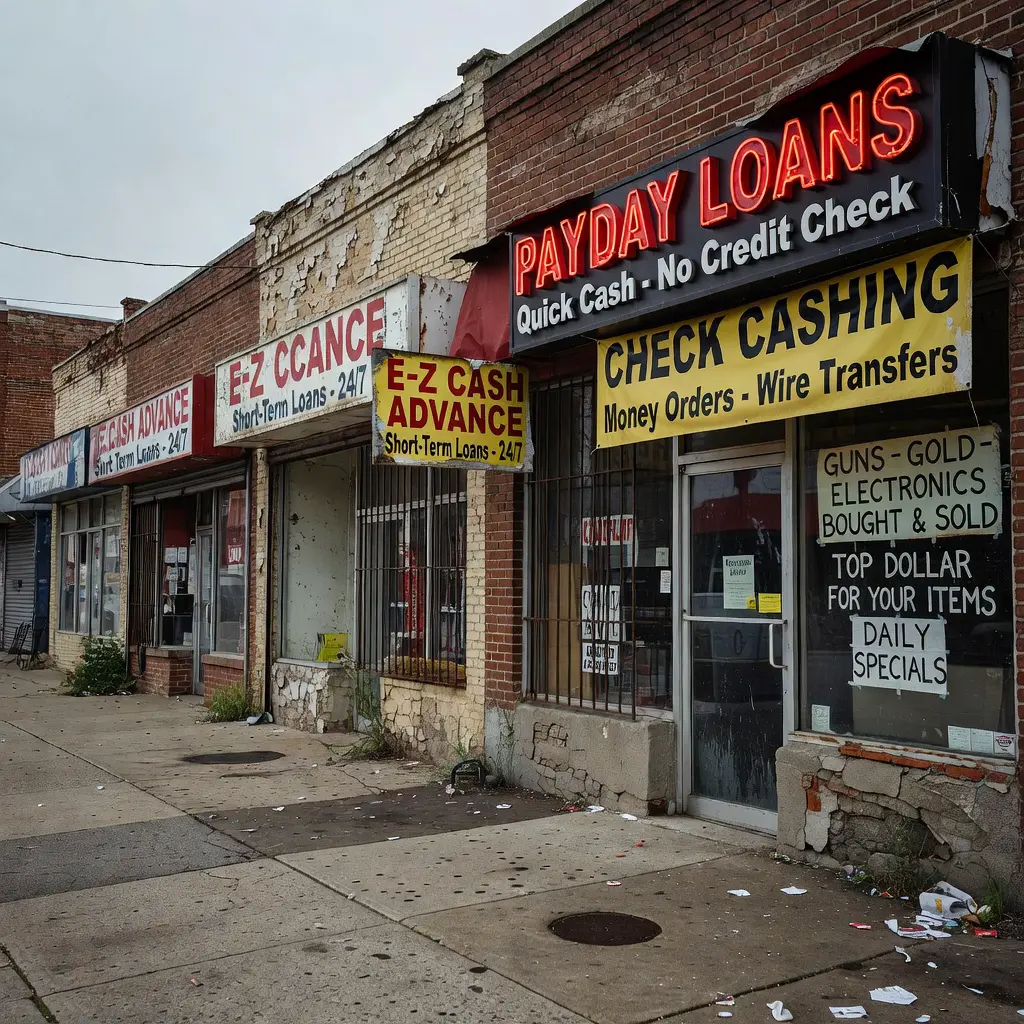
The unbanked and underbanked population in high-poverty urban neighborhoods faces a daily financial disadvantage that compounds over time. Without access to affordable checking accounts, direct deposit, or credit at reasonable rates, they effectively pay a persistent "poverty tax" — higher per-unit costs for virtually every financial transaction. This structural cost adds up to thousands of dollars annually that could otherwise support savings, health, or education, making it structurally difficult to accumulate even modest reserves against economic shocks like a medical emergency or a temporary job loss.
Social Systems That Perpetuate Disadvantage
Urban poverty is not maintained solely through economic mechanisms. A web of interconnected social systems — education, healthcare, criminal justice, and child welfare — interacts to create conditions in which poverty reproduces itself across generations. When these institutions fail or are structurally designed in ways that disadvantage the poor, the consequences are multi-generational and deeply resistant to short-term interventions.
Education Inequality as a Structural Problem
The American model of public school funding, which relies heavily on local property taxes, virtually guarantees that schools in impoverished neighborhoods receive dramatically less funding than those in wealthy suburbs. This creates a structural inequality in educational opportunity that bears no relationship to student need — in fact, students in high-poverty neighborhoods typically require more resources, not fewer, to overcome the disadvantages they bring to the classroom from their home environments.
The consequences of this underfunding are extensively documented. Schools in high-poverty urban areas more often struggle with high teacher turnover rates, less experienced instructors, fewer advanced courses, outdated technology, and crumbling physical infrastructure. Students who attend and graduate from these schools are less prepared for college or technical training, limiting their access to higher-wage employment. This is not a failure of individual ambition or community values — it is the entirely predictable outcome of a structurally unequal system of public investment in children's futures.
Early childhood education represents another critical and costly failure point. Access to high-quality pre-K programs dramatically improves long-term educational and economic outcomes for children experiencing poverty, yet enrollment in quality programs correlates strongly with family income. Decades of comparative international research — which you can zjistěte více about in European social policy literature — demonstrates that universal early childhood education is among the highest-return public investments a society can make, yet the United States remains a significant outlier among wealthy nations in its failure to provide it universally.
Healthcare Access and the Poverty-Health Nexus
The relationship between poverty and health is bidirectional and self-reinforcing. Poverty creates conditions — chronic stress, environmental toxin exposure, food insecurity, overcrowded housing — that directly damage physical and mental health. Poor health, in turn, reduces earning capacity, generates medical debt that can be financially catastrophic, and can trigger or profoundly deepen poverty. This cycle is particularly severe in urban areas where environmental pollution, housing overcrowding, food deserts, and inadequate green space create unique health burdens concentrated in the same communities already most burdened economically.
Urban neighborhoods with high poverty rates consistently show significantly elevated rates of preventable chronic disease, including Type 2 diabetes, hypertension, asthma, and cardiovascular disease. These conditions are linked both to the chronic physiological stress of poverty — what researchers term "allostatic load" — and to specific environmental exposures endemic to disinvested urban areas. Lead paint in aging housing stock, air pollution from proximity to highways and industrial sites, absence of safe spaces for physical activity, and reliance on food deserts rather than grocery stores all contribute to health disparities that are not random but systematically concentrated in communities already experiencing economic disadvantage.
Mental health is an equally critical and chronically underresourced dimension of the poverty-health relationship. The psychological toll of poverty — constant financial worry, the trauma of housing instability, exposure to community violence, and the corrosive shame of social stigma — creates significant and measurable mental health burdens. Yet access to mental healthcare in low-income urban areas remains severely limited. Long waiting lists, geographic and transportation barriers, inadequate insurance coverage, and cultural stigma surrounding mental health treatment all drastically reduce utilization of even the limited services that nominally exist.
The Criminal Justice System as a Poverty Engine
No analysis of urban poverty is complete without examining the role of the criminal justice system in actively perpetuating economic disadvantage. The United States' experiment with mass incarceration has had a disproportionate and devastating impact on low-income urban communities and communities of color, creating what many researchers now describe as a "poverty trap" embedded directly within the legal and correctional system itself.
Incarceration has direct and lasting economic consequences for individuals and their families that extend far beyond the sentence served. A conviction and prison record creates significant barriers to employment — most job applications include background check requirements, and many employers categorically exclude applicants with records — as well as barriers to housing applications, professional licensing, public benefits eligibility, and educational financial aid. The collateral legal consequences of a conviction can extend for decades, effectively barring individuals from meaningful participation in the mainstream economy long after any debt to society has nominally been repaid.
The broader communities from which incarcerated individuals are drawn are also directly and measurably harmed. The removal of working-age adults from neighborhoods disrupts family structures, reduces household income, traumatizes children in ways that affect their development and educational outcomes, and destabilizes the social fabric of already-precarious communities. Research has powerfully documented how concentrated incarceration in specific urban neighborhoods has functioned as a mechanism that deepens and concentrates urban poverty, rather than addressing the social conditions that contribute to crime. Serious engagement with urban poverty therefore requires a clear-eyed confrontation with the ways the criminal justice system has been structured to compound disadvantage for those at the economic margins.
Evidence-Based Pathways to Sustainable Solutions
Understanding the causes of urban poverty is only meaningful insofar as it leads to effective, sustained action. The significant good news is that decades of policy research and community practice have produced a robust body of evidence about what actually reduces poverty and expands opportunity. The challenge is not a lack of knowledge about effective strategies — it is the political will and resource allocation required to implement them at scale. It is also worth noting, as advocates have long argued, that understanding the distinction between charity versus policy solutions is fundamental to choosing approaches that can actually create lasting change rather than managing symptoms indefinitely.
Policy Interventions With Proven Impact
The most effective anti-poverty interventions share a defining common characteristic: they address structural causes rather than individual symptoms. Housing vouchers, earned income tax credits, minimum wage increases tied to living costs, Medicaid expansion, universal pre-K programs, and reformed school funding mechanisms all have substantial evidence bases demonstrating their effectiveness at reducing poverty rates and improving long-term outcomes for children and families.
The following policy approaches have demonstrated the strongest and most consistent evidence of meaningful impact across multiple rigorous studies and natural experiments:
- Expanding housing vouchers and investing in affordable housing construction in high-opportunity neighborhoods, breaking the structural link between poverty and geographic concentrated disadvantage
- Raising the minimum wage to a regional living wage level, indexed to inflation and local cost of living, so that full-time work guarantees a minimally decent standard of living
- Universal pre-K and childcare subsidies that enable parents to work while ensuring children receive quality developmental education in their critical early years
- Medicaid expansion in the remaining holdout states, closing the coverage gap that leaves millions of low-income working adults without health insurance
- Criminal justice reform including reducing collateral consequences of conviction, ending cash bail that disproportionately punishes poverty, and addressing over-policing in low-income communities
- School funding reform that reduces dependence on local property taxes and ensures adequate, equitably distributed resources for high-need public schools
- Community reinvestment requirements and fair lending enforcement to channel capital to underserved neighborhoods and actively combat the enduring legacy of redlining
Community Organizing and Grassroots Power Building
Policy change does not happen in a vacuum. It requires sustained, organized constituent pressure over time, and the evidence is clear that community organizing is among the most powerful tools available for achieving the structural changes that reduce poverty. From the Civil Rights Movement of the 1950s and 1960s to contemporary campaigns for minimum wage increases, tenant protections, and equitable school funding, organized communities have repeatedly shifted public policy in ways that expanded economic opportunity for those at the margins.
Effective community organizing in the context of urban poverty involves several interconnected and mutually reinforcing elements:
- Building relational power by connecting residents across geographic, demographic, and cultural lines around shared interests and concerns
- Developing indigenous leadership from within affected communities, centering the experience and agency of those most directly impacted by poverty
- Combining direct service with advocacy, meeting immediate material needs while simultaneously pursuing the systemic changes that make direct service less necessary
- Creating broad coalitions that bring together labor unions, faith communities, housing organizations, and health advocates around shared policy goals
- Using both data and personal narrative to make the case for change — quantitative evidence for policymakers, lived experience for the public and media
- Building the capacity for sustained, multi-year campaigns with the organizational resilience and patience to pursue structural policy victories that rarely come quickly

The evidence from decades of organizing work across different cities and different issue areas shows unambiguously that communities experiencing poverty are not passive victims waiting for external rescue — they are active agents of change capable of building power, winning campaigns, and transforming the conditions of their neighborhoods when given the resources, technical support, and political responsiveness their organizing deserves.
Conclusion: From Understanding to Structural Action
Urban poverty is not an inevitability woven into the fabric of city life. It is the product of identifiable, measurable structural forces — housing inequality rooted in a history of deliberate discrimination, wage stagnation driven by policy choices favoring capital over labor, predatory industries designed to extract wealth from financially vulnerable communities, underfunded schools that trap children in cycles of limited opportunity, inadequate healthcare that allows preventable illness to compound economic disadvantage, and a criminal justice system that too often functions as a poverty engine rather than a safety mechanism. Each of these forces was shaped by specific policy decisions made at specific historical moments, and each can be reshaped by better-designed policies made today.
The analysis presented throughout this article points toward several clear and interconnected conclusions. First, individual-level interventions — job training programs, financial literacy workshops, charitable food banks — are necessary relief efforts but deeply insufficient in isolation, because they treat the symptoms of structural failure while leaving the causes intact and actively operating. Second, the communities most burdened by urban poverty are not without resilience, creativity, or organizational capacity; they are active and essential partners in any solution strategy that aspires to lasting success. Third, the evidence base for effective structural interventions is well-established and growing — the barrier is not ignorance about what works, but insufficient political will to implement it at the scale that the problem demands.
For those engaging with urban poverty through the lens of social issues journalism, community advocacy, or policy analysis, the framing of these issues in public discourse matters profoundly. Narratives that focus on individual failures and moral shortcomings obscure the structural causes, reduce public support for effective interventions, and make meaningful policy responses less likely. Narratives that accurately illuminate the systemic forces at work create the public understanding and political space that structural change requires. As readers, citizens, and community members, demanding that coverage of urban poverty be grounded in structural analysis and human dignity is itself a form of advocacy — one that supports the daily work of the communities fighting to build a more equitable urban future.


Comments
The point about redlining from the 1930s still mapping onto today's poorest neighborhoods really hits home. It shows how these structures are baked into the geography we live in.
It's striking how the article points out that neighborhoods redlined in the 1930s are still the poorest today—those policy decisions really do echo across generations.
It’s striking how persistent the effects of redlining are—neighborhoods decades later still face underinvestment. Makes me wonder how long it will take for policy changes to actually shift these patterns.
It's striking how the article connects historical redlining directly to today's housing struggles — I hadn't realized the long-term impact was still so visible in city maps.
The part about housing cost burden eating up 50%+ of income really hits—once rent takes that much, even a small car repair can snowball into missed payments. How do cities actually enforce zoning changes when neighborhoods fight any new dense housing?
The part about housing cost burden eating up 50%+ of income really hit home—if you’re spending that much on rent, how is anyone supposed to build an emergency fund or handle a surprise medical bill?
The section on housing cost burden hit home—when rent eats up 50%+ of income, it’s basically impossible to save for anything. How would expanding housing vouchers avoid just pushing rents higher in those “high-opportunity” neighborhoods?
The point about the federal minimum wage not changing since 2009 really stuck with me — I knew it had been a while, but seeing it laid out next to actual cost-of-living numbers makes the gap feel almost absurd.
The point about redlined neighborhoods from the 1930s still being the poorest areas today is something I never fully connected until reading this. It really reframes how I think about what people mean when they say "just work harder."
The point about redlined neighborhoods from the 1930s still being the poorest areas today really stuck with me — I grew up in one of those neighborhoods and you can still see exactly where the boundaries were drawn just by looking at which streets have crumbling sidewalks and which ones don't.