

The Hidden Predator: How Online Gambling Exploits Financial Vulnerability

Among the most urgent social justice issues of our digital era is the quiet but devastating spread of predatory gambling platforms into communities already fighting to stay afloat. News blogs, investigative reporters, and community advocates have spent years documenting the cascading effects of financial predation on low-income households — from payday lending to rent-to-own schemes — but online casinos have largely escaped the same level of public scrutiny. That is beginning to change. As researchers, policymakers, and affected communities shine a light on these platforms, the evidence reveals an industry that does not simply attract problem gamblers by accident. It deliberately engineers its products and marketing strategies to extract maximum revenue from the people least equipped to say no.
The rise of mobile gambling has accelerated these dynamics in ways that older forms of gambling never could. Unlike a physical casino that requires transportation and the social friction of being seen gambling in public, today's online platforms are available around the clock on the same devices people use to check their bank balance or apply for jobs. Social issues researchers and public health experts have documented a clear, repeating pattern: the expansion of online gambling access correlates with increased problem gambling rates among low-income populations, rising household debt driven by gambling losses, and growing demand for services from organizations already overstretched by the broader crisis of economic inequality. This article examines exactly how these platforms operate, who they target, and what it will take to hold them accountable.
Who Gets Targeted: Geographic and Demographic Patterns in Casino Marketing
The data on online gambling targeting is unambiguous and deeply troubling for anyone committed to economic equity. Studies conducted across the United Kingdom, Australia, the United States, and the European Union consistently show that online gambling advertising concentrates in low-income postal codes at rates far exceeding their population share. Data brokers, affiliate networks, and programmatic advertising platforms allow casino operators to identify users based on income proxies — purchase history, credit inquiries, browsing patterns, and even the type of mobile device being used. A user who searches for emergency loan options on a Tuesday morning may find casino advertisements saturating their social media feed by Wednesday afternoon.
This is not coincidence or an unintended byproduct of broad-based advertising. It is deliberate demographic targeting, and it is the operating norm across the industry. Every platform that positions itself as a nejlepší online casino competes fiercely for new users, and the most efficient path to acquiring users who will spend large amounts relative to their financial capacity is to identify people whose financial stress makes the dream of a windfall psychologically irresistible. Platforms calculate their user acquisition costs against projected lifetime customer value, and vulnerable users — those who chase losses, borrow to fund gambling, and struggle to disengage — are the most profitable customers these platforms have.
The Psychology of Scarcity and Why It Creates Real Vulnerability
Understanding why low-income communities bear disproportionate harm from online gambling requires engaging with behavioral economics research on the scarcity mindset. When people face severe resource constraints — whether of money, food, or housing security — their cognitive bandwidth narrows in ways that impair long-term decision-making. The mind becomes preoccupied with immediate shortage, making it harder to evaluate probabilistic risks accurately, resist impulsive decisions, or maintain the kind of sustained self-regulation that avoiding addictive products requires. Online casinos study this dynamic carefully and use these insights not to protect users, but to exploit them.
The result is that problem gambling is not equally distributed across the income spectrum. Research consistently finds that individuals in the lowest income quintile experience problem gambling rates three to four times higher than the population average — not because low-income people are less rational or disciplined, but because the psychological conditions of poverty genuinely reduce the cognitive resources available for resisting addictive products. To understand the deeper systemic conditions that make communities economically fragile and vulnerable to these forms of exploitation, it is worth exploring the drivers of urban poverty in depth.
Predatory Tactics: Bonuses, False Promises, and the Architecture of Addiction
Welcome Bonuses as a Gateway to Financial Harm
The welcome bonus is the online gambling industry's most visible and most deliberately misrepresented tactic. Advertised as "free money," "matched deposits," or "risk-free bets," these promotions exist to accomplish a single goal: lower the psychological barrier that prevents a first-time visitor from making an initial deposit. The marketing language is chosen to evoke the powerful feeling of receiving something for nothing — a sensation particularly resonant for someone already under financial pressure. What the fine print invariably reveals is a far more punishing reality: the player must wager the bonus amount — and often their own deposit as well — between 30 and 50 times before a single dollar may be withdrawn.
What the industry promotes as výhody uvítacích bonusů are in practice engineered to maximize user retention rather than provide genuine player value. This reality is well understood by industry insiders but systematically obscured from consumers — particularly those who are new to online gambling and unfamiliar with the mechanics of wagering requirements, restricted game categories, and time-limited withdrawal conditions. The combination of financial stress, the illusion of a windfall, and impenetrable small-print terms creates ideal conditions for a financially harmful first experience. And the platforms know this, because their own analytics show that users who make a first deposit following a bonus offer have significantly higher rates of continued spending and loss.
Dark Patterns: Interface Design Engineered to Undermine Rational Choice
Beyond recruitment tactics, online casinos deploy what interface designers call dark patterns — deliberate design choices that use the mechanics of user experience to systematically undermine users' ability to make rational, self-interested decisions. These are not accidents or oversights. They are features, refined through continuous testing against massive user populations to identify the specific choices that most effectively increase session length, deposit frequency, and total lifetime losses per user.

Common dark patterns documented across major online casino platforms include: removing clocks from game interfaces so players lose track of elapsed time; displaying wins with large celebratory animations while losses are minimized with muted, brief graphics; making the deposit process instantaneous and frictionless while adding verification delays of several days to withdrawals; deploying autoplay features that remove the deliberate act of pressing a button between spins, allowing sessions to continue passively while a player's focus drifts; and sending precisely timed re-engagement notifications to users who have attempted to stop, calibrated to arrive around paydays and benefit payment dates when funds are newly available.
The Economic Toll: Quantifying the Damage to Low-Income Households
The financial harm that online gambling inflicts on low-income households is both substantial and systematically underreported. While individual cases can be catastrophic — a single session wiping out rent money, utility funds, or emergency savings — the aggregate community-level impact constitutes a genuine wealth extraction mechanism that deepens existing poverty. Money that might have circulated within the local economy, supported family members, or accumulated as savings is transferred instead to offshore casino operators who pay minimal taxes in the jurisdictions where their users live.
| Impact Category | Low-Income Households | Middle and Higher-Income Households |
|---|---|---|
| Average monthly gambling spend as % of household income | 12–19% | 2–5% |
| Rate of problem gambling diagnosis | 3–4× higher than average | At or below population average |
| Likelihood of housing instability tied to gambling losses | Significantly elevated | Low |
| Access to professional problem gambling treatment | Very limited or inaccessible | Moderate to readily available |
| Use of high-interest or predatory loans to fund gambling | Substantially higher | Rare |
| Impact of losses on family food and healthcare security | Frequent and severe | Infrequent and manageable |
Independent consumer advocates and public health researchers have compiled detailed platform assessments examining how different sites compare on transparency, wagering requirements, and the quality of their responsible gambling tools — you can review these findings here to see how dramatically platforms differ in practice. What such comparisons consistently confirm is that even platforms with nominally stronger responsible gambling features continue to derive a disproportionate share of their revenue from problem gamblers — a structural reality that cannot be resolved through voluntary self-regulation alone.
The Marketing Machine: Reaching Vulnerable People at the Right Moment
Online casinos spend billions of dollars annually on user acquisition, and a disproportionate share of that investment flows through channels and placements calibrated to reach economically vulnerable audiences. Understanding the specific tactics these platforms use is the critical first step toward developing community-level awareness and resistance.
- Sports betting integrations: Major operators have secured sponsorship deals with professional sports leagues, embedding gambling brands into the cultural spaces where working-class fans are most heavily represented and normalizing betting as a natural part of watching sport.
- Influencer and affiliate marketing: Platforms pay social media influencers — particularly those with younger and financially precarious audiences — to promote their services, often without adequate disclosure that the endorsement is a paid commercial arrangement.
- Free-to-play apps as behavioral conditioning: Casual mobile gaming apps that replicate casino mechanics using virtual currency build the habit loop of gambling behavior before transitioning users to real-money platforms once patterns are established.
- Predatory re-engagement campaigns: Users who have paused their gambling or attempted informal self-exclusion receive personalized email and SMS messages, frequently timed to coincide with paydays, tax refunds, or government benefit payment dates.
- Financial distress keyword targeting: Search advertising is deliberately placed against queries associated with economic hardship — "how to make money fast," "quick cash options," "emergency funds" — positioning gambling as a practical solution to financial stress.
- Multilingual and culturally targeted content: Platforms create gambling content in dozens of languages and regional dialects to reach immigrant communities and non-English-speaking populations who may be less aware of available regulatory protections.
What unites all of these tactics is their reliance on data-driven behavioral profiling. Every click, session duration, withdrawal attempt, and loss event feeds machine learning systems that refine targeting with increasing precision over time. The result is an advertising ecosystem of extraordinary efficiency at finding people in their most financially and emotionally exposed moments. Just as reactive charitable giving consistently fails to address the underlying conditions of poverty, reactive gambling harm services similarly cannot keep pace with an industry this sophisticated at creating harm — a parallel that advocates focused on sustainable poverty solutions have long recognized and documented.
Regulatory Failures: Why Existing Protections Fall Short
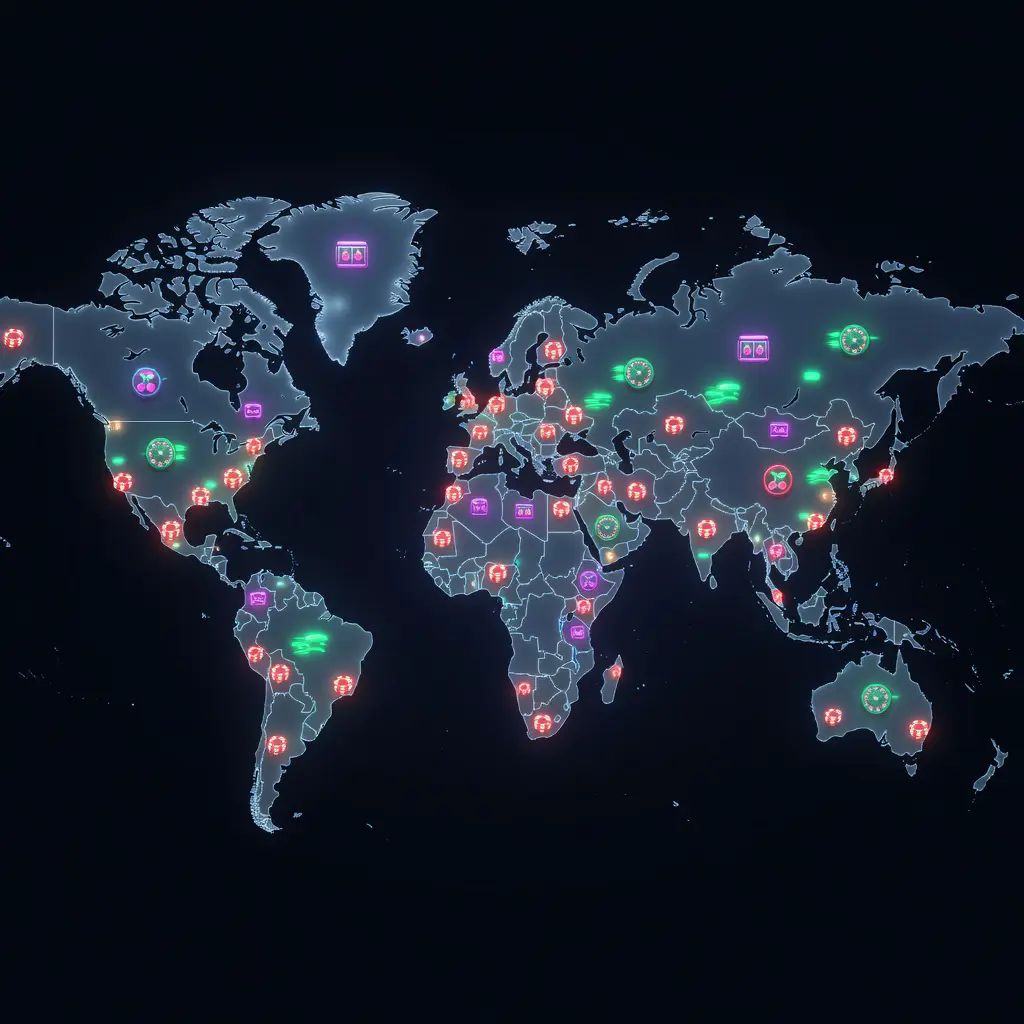
Online gambling regulation varies enormously across jurisdictions, and the deliberately international structure of most major casino operators is designed to exploit this variation. Most large platforms operate through licensing arrangements in permissive jurisdictions — Malta, Gibraltar, and Curaçao are the most common — that impose minimal consumer protection requirements while permitting operators to serve players in dozens of countries with far stronger domestic regulatory frameworks. Players who assume they are protected by the laws of their home country often discover, when problems arise, that they are effectively subject to the terms of a license issued by a regulator thousands of miles away with little capacity or incentive to pursue enforcement on behalf of foreign consumers.
- Mandatory affordability assessments: Requiring all platforms to verify a user's income and set deposit limits proportionate to demonstrated financial capacity before allowing significant gambling activity — modeled on responsible lending requirements already standard in financial services regulation.
- Targeted advertising restrictions: Prohibiting casino advertising directed at users whose behavioral data indicates financial vulnerability, including those who have recently searched for debt assistance, payday loans, or income support resources.
- Wagering requirement caps: Legally limiting the multipliers attached to promotional offers so that welcome bonuses cannot be used to create no-exit traps for players who deposit in response to misleading marketing.
- Proactive harm intervention obligations: Requiring platforms to use their own behavioral analytics — which they already collect in exhaustive detail — to identify users exhibiting signs of problem gambling and intervene with substantive support, not merely passive opt-in self-exclusion tools that most affected users never engage.
- Mandatory treatment fund contributions: Levying a dedicated percentage of gambling revenue to fund independent, publicly accessible problem gambling treatment services available at no cost to affected individuals and families.
- Cross-border enforcement frameworks: Establishing binding international agreements that give regulators in a player's home country meaningful authority to enforce consumer protection standards against offshore operators serving their citizens.
- Autoplay and acceleration feature bans: Eliminating interface features — autoplay, turbo modes, instant replay — that are specifically designed to undermine user agency and accelerate play past intended spending thresholds.
Progress on these reforms has been inconsistent and slow, hampered by the considerable political influence that the gambling industry exercises in many jurisdictions, the significant tax revenues that licensed operators generate for public treasuries, and the genuine complexity of enforcing consumer protections across international borders. In countries where gambling revenues fund public services, there is a structural conflict of interest that has reliably slowed meaningful reform: the same government department that funds problem gambling helplines also depends on the industry that produces problem gamblers to balance its budget.
What Communities Can Do: Building Awareness and Collective Resistance
While systemic regulatory reform requires sustained advocacy at the policy level, communities and individuals can take meaningful steps to reduce harm right now. The most powerful of these steps is also the most straightforward: openly naming online gambling as a social harm rather than framing it as a personal failing. When problem gambling is treated as a moral weakness or individual dysfunction, it isolates affected people and suppresses the collective awareness that makes organized resistance possible. When it is understood as the predictable outcome of deliberate corporate predation — designed by product teams, refined by data scientists, and enabled by regulatory loopholes — it becomes possible to build genuine community responses.
Organizations working on economic empowerment, housing stability, and financial literacy all have natural roles to play. Integrating education about predatory gambling tactics into existing financial coaching, debt counseling, and community education programs gives people the knowledge to recognize and resist these platforms before harm escalates. Faith communities, tenant associations, labor unions, and neighborhood organizations are all proven sites for spreading this awareness and creating the social bonds that make it easier for people already affected by gambling harm to seek help without shame. The fight against online casino predation, in this sense, is inseparable from the broader struggle for community economic self-determination: it is a fight about who controls the economic future of vulnerable neighborhoods and who gets to extract wealth from them.
Conclusion: Connecting Predation, Poverty, and the Path Forward
The predatory relationship between online casinos and low-income communities is not an accident, a market failure, or an unintended consequence. It is the designed output of a business model that has identified financial vulnerability as its most reliable profit driver. Through deliberate demographic targeting, psychologically manipulative product design, misleading bonus promotions, and a global regulatory architecture riddled with exploitable gaps, these platforms extract significant wealth from the communities that can least afford to lose it. The structural harms they produce — problem gambling, family breakdown, housing instability, debt crises, and mental health deterioration — are the predictable results of a system functioning exactly as its architects intended.
Addressing this harm demands the same multi-level approach that all effective anti-poverty work requires: individual empowerment, community organizing, regulatory reform, and an unflinching analysis of the power structures that allow predatory industries to operate with impunity. The story of online casino exploitation in low-income communities is, at its core, the same story as the broader struggle for economic justice — a story about who writes the rules, who those rules protect, and who is left to absorb the costs. Building a future in which gambling platforms cannot systematically extract wealth from people already living in poverty requires better laws, more accountable regulators, and communities with the knowledge and organization to resist. Most importantly, it requires recognizing these harms not as personal misfortune but as a collective problem demanding a collective response — and acting accordingly.



Comments
That bit about “risk-free” welcome bonuses needing 30–50x wagering before you can withdraw is wild—how is that even allowed to be advertised as free money?
That bit about “risk-free” welcome bonuses hiding 30–50x wagering requirements hit home. How is that even allowed to be advertised as free money when the withdrawal rules basically trap you?
The “30–50x wagering requirement” on those welcome bonuses is wild—how is that not considered misleading advertising? Feels like they’re counting on people not reading the fine print until it’s too late.
That part about “risk-free” welcome bonuses needing 30–50x wagering before you can withdraw is wild. How is that even allowed without bigger warnings right next to the promo?
The bit about “risk-free” welcome bonuses hiding 30–50x wagering is wild—how is that even allowed in plain advertising without a huge disclaimer upfront?