

The Hidden Social Cost of Casino Expansion in Czech Communities
When a new gambling venue opens its doors, local officials often celebrate the promise of tax revenue and employment. But social issues journalists and community advocates across Central Europe have consistently documented a darker reality beneath the glittering lights. The rapid proliferation of nové české kasino establishments represents far more than a leisure industry trend — it is a social welfare challenge that demands honest public scrutiny and informed debate.
News blogs focused on social issues have increasingly turned their attention to how gambling expansion reshapes entire neighborhoods. From rising household debt to overwhelmed addiction treatment centers, the footprint of casino culture extends well beyond the casino floor. This article examines the mechanisms through which new Czech casinos threaten community welfare — and why the conversation around responsible regulation has never been more urgent.
Economic Drain on Local Household Finances
The economic argument for casino development rests on the idea that gambling revenue circulates through local economies, funding schools, roads, and public services. In practice, however, the evidence tells a more complicated story. Research from neighboring European countries consistently shows that gambling establishments capture a disproportionate share of disposable income from low- and middle-income households — the very communities least equipped to absorb those losses.
Where the Money Actually Goes
A large proportion of casino revenue is extracted from a relatively small segment of players. Studies in Germany, Austria, and the United Kingdom have found that roughly 10 to 15 percent of players account for over 60 percent of gambling revenue — and a significant portion of that group meets clinical criteria for problem gambling. This means the business model of the modern casino is structurally dependent on the losses of people in financial distress. When analysts examine this through the lens of urban poverty forces, the implications for community welfare become deeply troubling.

Local businesses also suffer when a major gambling venue enters a market. Restaurants, entertainment venues, and retail shops frequently report decreased foot traffic and consumer spending as discretionary income shifts toward the casino. The phenomenon — known in economic research as the substitution effect — means that gambling expansion often fails to generate net new economic activity; it simply reroutes existing spending toward a single, extractive destination.
The Debt Spiral Affecting Families
Problem gamblers rarely lose money quietly. The financial damage radiates outward through families, affecting children's nutrition and educational stability, partners' employment, and the ability to maintain housing. In the Czech context, consumer credit organizations have flagged gambling-related debt as one of the fastest-growing categories of personal insolvency. Families trapped in this cycle frequently turn to social assistance programs — transferring private losses into a public cost that every taxpayer ultimately bears.
| Cost Category | Estimated Annual Cost (CZK) | Primary Impact Area |
|---|---|---|
| Social benefits and emergency assistance | 1,200,000 – 2,800,000 | Municipal social departments |
| Addiction treatment and counseling | 800,000 – 1,500,000 | Public health system |
| Family crisis and child welfare intervention | 400,000 – 900,000 | Child protection services |
| Criminal justice involvement | 350,000 – 750,000 | Police, courts, and corrections |
| Lost workplace productivity | 600,000 – 1,200,000 | Local employers and the broader economy |
The Addiction Crisis Amplified by Casino Culture
Gambling disorder is recognized by the World Health Organization as a clinical condition with serious consequences for mental health, family stability, and broader community resilience. The expansion of physical casinos — combined with aggressive digital marketing — has accelerated exposure to gambling stimuli at a societal scale. Understanding this crisis requires looking honestly at how the industry designs its products and how that design specifically targets vulnerable and lower-income populations.
How Marketing Tactics Deepen Dependency
One of the most troubling aspects of the modern gambling industry is the sophistication of its customer retention strategies. Loyalty programs, personalized bonuses, and introductory offers are engineered to maximize engagement time and return visit frequency. Tactics such as those explained in this detailed breakdown demonstrate how free spin offers are deployed not as simple promotions, but as psychologically calibrated tools designed to establish habitual play patterns — particularly among first-time users who may not recognize the behavioral conditioning at work.

The neurological basis of gambling addiction is well-documented. Slot machines and electronic gaming devices are specifically designed to trigger dopamine responses through near-miss experiences and variable reward schedules — the same mechanisms that underpin substance dependencies. When a new casino opens in a community, it doesn't simply offer entertainment; it introduces industrial-scale behavioral manipulation infrastructure into the social fabric of that neighborhood.
Warning Signs Documented in Czech Communities
Mental health workers and social counselors operating in municipalities with established gambling venues have reported consistent patterns that signal community-level harm. The following warning signs are among the most frequently cited by frontline practitioners:
- Increased emergency calls related to domestic disturbances linked to gambling losses within households
- A rise in child welfare referrals among families where at least one parent is a problem gambler
- Higher demand for emergency food assistance during and after major sports betting cycles and casino promotional events
- Growing waitlists at addiction counseling services in towns with newly opened venues, often within the first year
- Elevated rates of sleep disorders and anxiety among self-identified problem gamblers seeking primary care appointments
- Increased reports of workplace absenteeism and underperformance directly connected to gambling debt stress and preoccupation
- Spikes in short-term loan applications from individuals in catchment areas surrounding new casino openings
These are not abstract statistics — they represent real families in real communities navigating a crisis that was, in significant part, invited into their neighborhoods by policy decisions made without adequate social impact assessment or genuine community consultation.
Mounting Strain on Social Services and Public Infrastructure
Perhaps the most underreported dimension of casino expansion is its fiscal effect on local government. While municipalities often receive a portion of gambling tax revenues, independent analyses across the European Union have found that the public costs generated by problem gambling consistently outpace the tax benefits received at the local level. The arithmetic simply does not work in communities' favor when the full spectrum of social costs is accounted for.
Overwhelmed Support Systems
Social services departments in Czech municipalities near large gambling venues have reported structural strain across multiple service lines. Housing support workers describe an uptick in clients who have lost their homes following gambling-related financial crises. Family counselors carry rising caseloads. Debt advisory services face appointment backlogs of months. Each of these service lines requires staffing, infrastructure, and funding — costs that rarely appear in the pro-casino economic impact assessments presented to local councils before approval decisions are made.
For sector-specific data that policymakers and advocates can use to build evidence-based arguments for stronger regulation, the resource at https://czkasino.cz/ offers a useful starting point for understanding the Czech gambling landscape in greater depth.
The Health System Burden That Goes Uncounted
Beyond social services, the public health system absorbs significant costs associated with gambling disorder. General practitioners report elevated rates of anxiety, depression, and suicidal ideation among patients who disclose problem gambling. Hospital emergency departments see gambling-related crises. Psychiatric services face growing demand from individuals whose disorders went unaddressed for years. In a healthcare system already under budgetary pressure, this additional burden compounds existing resource constraints — particularly in smaller municipalities with limited specialist capacity and long referral wait times.
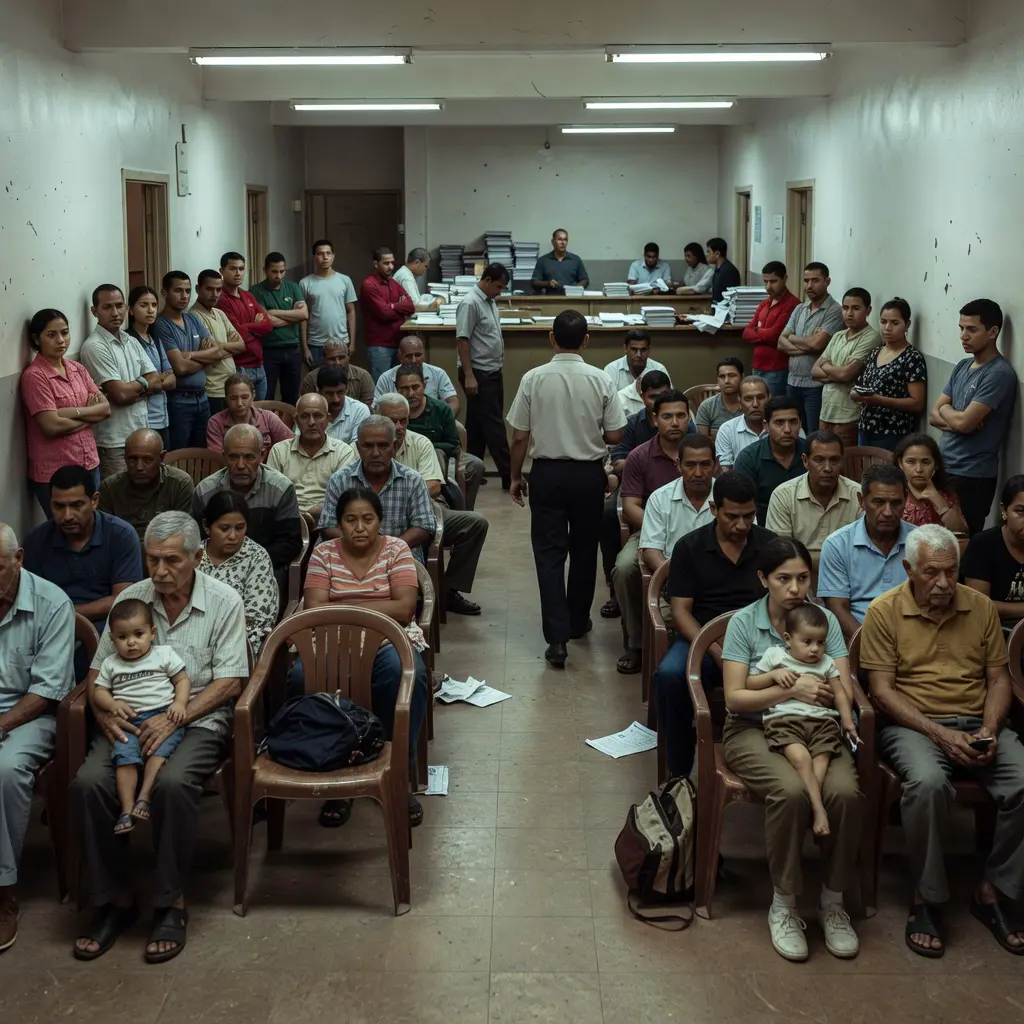
The cumulative effect is a systematic transfer of wealth and social cost from the gambling industry — which books the profits — to the public sector, which absorbs the damage. This dynamic is not unique to Czech communities; it is a structural feature of casino economies documented across dozens of countries and supported by extensive peer-reviewed research in health economics and social policy.
Widening Inequality and the Displacement of Community Fabric
Casinos do not distribute their harms evenly. Low-income communities, areas with higher rates of unemployment, and neighborhoods already experiencing broader social stressors are significantly more likely to bear the worst consequences of gambling expansion. This is not coincidence — it reflects both where casinos choose to locate and which populations are most susceptible to problem gambling in the absence of viable economic alternatives and strong social safety nets.
The Geography of Gambling Harm
Data consistently shows that gambling venues cluster in economically disadvantaged areas, where land costs are lower and political resistance to development is weaker. This geographic pattern means that communities already contending with poverty, inadequate housing, and reduced social capital are disproportionately exposed to gambling's extractive dynamics. Understanding these spatial patterns is essential context for the urban poverty trends shaping Czech social policy debates in the current decade.
As casinos attract investment and foot traffic, surrounding neighborhoods can experience a perverse form of economic disruption — rising property values that price out long-term residents, combined with an influx of gambling-related social problems that degrade quality of life for those who remain. Working-class families find themselves caught between rising rents and a deteriorating social environment, with neither the resources to adapt nor a clear path forward.
The Cultural Cost of Normalized Gambling
Beyond material harms, the normalization of gambling culture carries deep social costs that are harder to quantify but no less real. When gambling venues become fixtures of community life — when their logos appear on sports uniforms, their advertisements dominate public transport, and their community sponsorships provide cover for unfavorable regulatory scrutiny — the social narrative shifts. Gambling becomes ordinary. Risk becomes invisible. And the communities most likely to suffer harm are the least likely to have the political voice to resist further expansion of the very thing harming them.
The ordered sequence through which this normalization typically unfolds is disturbingly consistent across jurisdictions:
- A new gambling venue is approved on the basis of projected tax revenues and employment commitments
- Initial marketing campaigns target broad demographics, including young adults and first-time gamblers through social media and streaming platforms
- Problem gambling rates begin to rise within 18 to 36 months of opening, consistent with international longitudinal evidence
- Social service demand increases, but is rarely formally linked to the casino in public discourse or municipal budget debates
- The casino establishes community sponsorships and charitable donations to build social legitimacy and insulate against regulatory pressure
- Advocacy for additional venues, extended operating hours, or expanded digital offerings begins, citing established community presence and economic contribution
- Meaningful regulation, when it finally arrives, lags years behind the social damage already done — and by then the industry has become politically entrenched
What Communities and Policymakers Must Demand
The harms documented throughout this article are not inevitable. They are the predictable consequences of policy choices made without adequate attention to social impact evidence, and they are reversible through deliberate, evidence-grounded regulatory intervention. Communities across Europe have demonstrated that meaningful oversight, combined with genuine community voice in planning decisions, can significantly reduce the damage caused by gambling expansion.
Regulatory Frameworks That Have Proven Effective
Evidence from jurisdictions that have successfully reduced gambling-related harm points to a consistent set of policy interventions. Effective regulatory approaches include mandatory comprehensive social impact assessments prior to any casino licensing decision; hard caps on the density of gambling venues relative to resident population; robust self-exclusion programs with real technological enforcement mechanisms; requirements that a meaningful and audited proportion of gambling tax revenue be ring-fenced for addiction treatment, prevention, and community harm reduction; and independent monitoring of problem gambling prevalence rates with outcomes publicly reported and tied formally to licensing renewal decisions.
The Indispensable Role of Organized Communities
Regulatory reform does not happen without organized, sustained community pressure applied through legitimate democratic channels. Residents, social workers, healthcare professionals, educators, and local journalists all have a role to play in demanding transparency and accountability from both gambling operators and the elected officials who license them. Community organizing around gambling regulation has succeeded in multiple European municipalities in securing stricter controls, more robust social support funding, and greater democratic accountability over decisions that fundamentally shape the social character of neighborhoods for decades.
Effective community-level advocacy typically involves building diverse coalitions across affected groups; documenting local harms with specific, locally gathered data that officials cannot dismiss; engaging local and regional media to maintain public awareness over time; and holding elected representatives directly accountable at the ballot box for the consequences of their licensing decisions. None of this is effortless, but each step builds the kind of durable civic capacity that protects communities long after any single campaign concludes.
Conclusion: The Full Cost Must Be Counted
The expansion of casino culture into Czech communities is not simply a matter of personal choice or individual entertainment preference. It is a systemic social welfare challenge with measurable, documented consequences for household finances, public health infrastructure, addiction services, community equality, and the social fabric that holds neighborhoods together across generations. The evidence reviewed throughout this article makes clear that new casinos generate costs that are borne disproportionately by the communities least equipped to absorb them — while profits flow to operators and shareholders who bear none of the social cost they impose on others.
Addressing this challenge requires honest, evidence-based public debate — the kind that independent journalism focused on social issues is uniquely positioned to facilitate and sustain. It requires policymakers willing to look beyond short-term revenue projections to the full social balance sheet, including costs that are real but conveniently difficult to attribute. And it requires communities to understand what is genuinely at stake when the next casino proposal arrives at the planning table. The glittering lights obscure a deeper cost — one that communities across the Czech Republic are already paying, often without fully understanding why their social services are strained, their neighbors are struggling, and the texture of daily life feels diminished.
Informed communities make better decisions. That process begins with access to honest information, rigorous journalism on social issues, and the collective willingness to demand accountability from those who profit from gambling's expansion while externalizing its true costs onto everyone else. The first step is simply refusing to look away from what the evidence already shows.



Comments
I’ve noticed that in my town, the new casino really shifted spending away from local shops, just like the article mentions. It’s frustrating to see community businesses struggle while the casino profits.
I noticed the part about rising household debt being concentrated in just a small group of players — it really puts into perspective how these casinos thrive on the struggles of vulnerable families.
I hadn’t realized how much of the revenue actually comes from a small group of problem gamblers—makes me wonder if the promised local economic benefits are really worth the social costs.
That stat about 10–15% of players generating over 60% of the revenue is wild, and kind of explains why the “tax money will help schools” argument feels shaky. Are there any Czech-specific studies that back up the same split?
That stat about 10–15% of players bringing in over 60% of revenue is wild—do we have similar numbers specifically for the Czech Republic, or is it mostly based on Germany/Austria/UK data?